A july post - 'Post fellowship shock syndrome'
Post fellowship shock syndrome is a kind of culture shock for young graduates when they transit from big tertiary care academic centers to regular community based medical practice. Transit from high tech., literature oriented, academic based and superior nursing quality to business oriented, "thats how we do things here" practice, no house staff support, no billing and business experience and wide spectrum of nursing quality - put unprepared young graduates into mental and cultural shock and may leave them frustrated with present situation. And sometime in changing jobs they find themselves jumping from firepan to fire. It is important to prepare graduating residents and fellows for business and billing practice of medicine.
(Post fellowship shock syndrome is a term invented by editors of this website)
Thursday, July 14, 2011

Tuesday, July 12, 2011
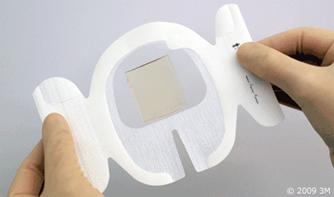
Tegaderm CHG Dressing with Cavilon No Sting Barrier Film
Tegaderm CHG is a transparent dressing integrated with CHG (chlorhexidine gluconate) that serves as a barrier to organisms, including those most commonly associated with CLBSI. It comes with No Sting Barrier Film, which is a fast-drying, non-sticky, alcohol-free liquid barrier film that forms a breathable, transparent coating on the skin. No Sting protects damaged or intact skin from body fluids, adhesive trauma, friction, and incontinence. The No Sting Barrier Film application prior to Tegaderm increases the adhesiveness of the dressing, and the likelihood that the dressing will remain intact for 7 days.


Tegaderm CHG is a transparent dressing integrated with CHG (chlorhexidine gluconate) that serves as a barrier to organisms, including those most commonly associated with CLBSI. It comes with No Sting Barrier Film, which is a fast-drying, non-sticky, alcohol-free liquid barrier film that forms a breathable, transparent coating on the skin. No Sting protects damaged or intact skin from body fluids, adhesive trauma, friction, and incontinence. The No Sting Barrier Film application prior to Tegaderm increases the adhesiveness of the dressing, and the likelihood that the dressing will remain intact for 7 days.
Monday, July 11, 2011
Saturday, July 9, 2011
Multaq - Thumbs down?
"A randomized trial of dronedarone (Multaq) in patients with permanent atrial fibrillation -- an unapproved indication for the antiarrhythmic drug -- has been stopped early because of increased cardiovascular events among patients receiving the product, its manufacturer said. Dronedarone, sold by sanofi-aventis, is currently approved to treat atrial flutter and paroxysmal or persistent -- but not permanent -- afib. The phase IIIb trial, called PALLAS, had enrolled 3,148 patients with permanent afib, with 70% showing symptoms for more than two years, according to a company statement. The same proportion also had heart failure at NYHA Class I to III at baseline."
"A randomized trial of dronedarone (Multaq) in patients with permanent atrial fibrillation -- an unapproved indication for the antiarrhythmic drug -- has been stopped early because of increased cardiovascular events among patients receiving the product, its manufacturer said. Dronedarone, sold by sanofi-aventis, is currently approved to treat atrial flutter and paroxysmal or persistent -- but not permanent -- afib. The phase IIIb trial, called PALLAS, had enrolled 3,148 patients with permanent afib, with 70% showing symptoms for more than two years, according to a company statement. The same proportion also had heart failure at NYHA Class I to III at baseline."
Friday, July 8, 2011
The Effect of Catheter to Vein Ratio on Blood Flow Rates in a Simulated Model of PICC
Important work published this month in chest1 regarding catheter-related thrombosis. It is presumed that the presence of a catheter within the lumen of a vein will decrease flow and potentially create stasis and thrombosis.
Researchers used fluid mechanics to calculate relative flow rates as a function of the ratio of the catheter to vein diameters simulating the size of upper extremity veins and commonly used peripherally inserted central catheters (PICCs).
Results demonstrate that fluid flow is dramatically decreased, PICCs, in particular, may substantially decrease venous flow rates by as much as 93%.
The Effect of Catheter to Vein Ratio on Blood Flow Rates in a Simulated Model of Peripherally Inserted Central Venous Catheters- CHEST July 2011 vol. 140 no. 1 48-53
Thursday, July 7, 2011
Tuesday, July 5, 2011
Biopatch application at CVC site
Application of BIOPATCH (ETHICON, Inc.), releases chlorhexidine gluconate (CHG), a broad-spectrum antimicrobial and antifungal agent at CVC insertion site and one application is good for up to 7 days. It is clinically proven in reducing Catheter-Related Blood Stream Infections (CRBSI ). It provides 360º protection around insertion site even in the presence of organic matter including blood, sera, and proteins.
![]()
Application of BIOPATCH (ETHICON, Inc.), releases chlorhexidine gluconate (CHG), a broad-spectrum antimicrobial and antifungal agent at CVC insertion site and one application is good for up to 7 days. It is clinically proven in reducing Catheter-Related Blood Stream Infections (CRBSI ). It provides 360º protection around insertion site even in the presence of organic matter including blood, sera, and proteins.

Monday, July 4, 2011
100 great things about America
"Though our affection for America is a year-round phenomenon, summer seems to make the heart and mind grow even fonder. Holidays contribute to this: Memorial Day ushers in the season, followed soon after by our Uncle Sam's favorite, July Fourth. Getting out into the great outdoors also kindles nation-love, as only a visit to national parks like Yellowstone or the Great Smoky Mountains can do. So, too, does the food of summer: grilled hot dogs and hamburgers, corn on the cob, and blueberry pie on a brimming picnic table. So we think it only fitting to present to you our second annual list of 100 Great Things About America right as we head into the summer solstice." ......Fortune/CNNMoney Magazine
Click here to see 100 great things about this great nation on earth
http://features.blogs.fortune.cnn.com/2011/07/01/100-great-things-about-america/
Sunday, July 3, 2011
Dental workup and 2 'curious cases of SQ Emphysema'
1. In 1900, the first recorded case of spontaneous subcutaneous emphysema was reported in a bugler for the Royal Marines who had had a tooth extracted: playing the instrument had forced air through the hole where the tooth had been and into the tissues of his face.
2. A case of spontaneous subcutaneous emphysema was reported in a submariner for the US Navy who had had a root canal in the past; the increased pressure in the submarine forced air through it and into his face.
Parker GS, Mosborg DA, Foley RW, Stiernberg CM. "Spontaneous cervical and mediastinal emphysema". Laryngoscope 100 (9): 938–940 (September 1990).
Saturday, July 2, 2011
Q: Out of all Quinolones which is reported worse to cause CNS symptoms?
Answer: Moxifloxacin
Moxifloxacin is reported as worst among all quinolones for causing CNS toxicity which includes tremor, confusion, anxiety, insomnia, agitation, psychosis or even seizure.
Answer: Moxifloxacin
Moxifloxacin is reported as worst among all quinolones for causing CNS toxicity which includes tremor, confusion, anxiety, insomnia, agitation, psychosis or even seizure.
Galatti L, Giustini SE, Sessa A, et al. - "Neuropsychiatric reactions to drugs: an analysis of spontaneous reports from general practitioners in Italy" , Pharmacological Research, Volume 51, Issue 3, March 2005, Pages 211-216
Subscribe to:
Posts (Atom)